Study I · Material Culture
Lungi: everyday
cloth, layered
histories
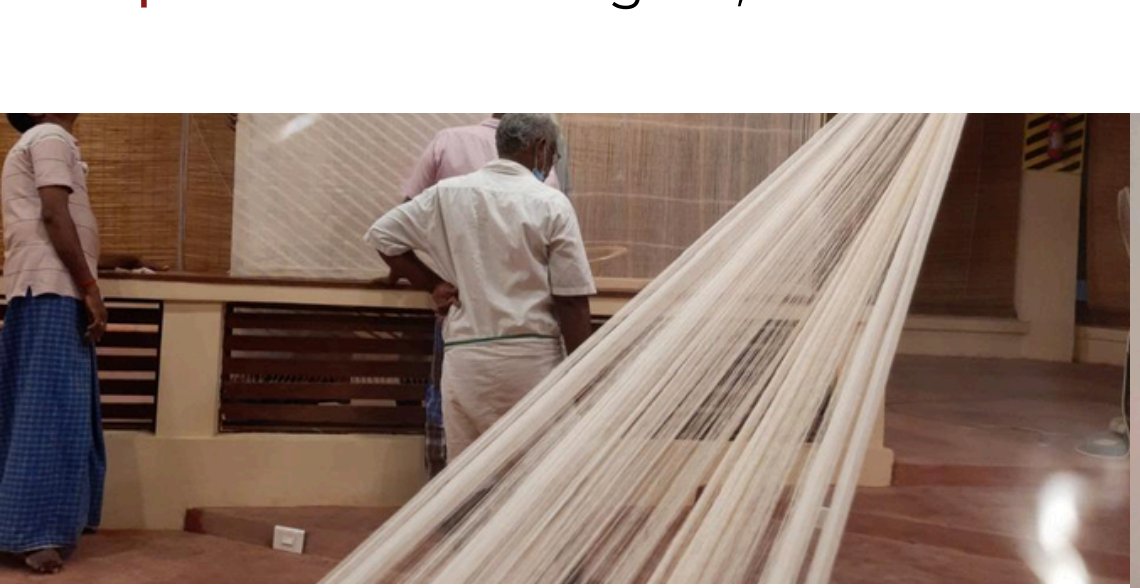
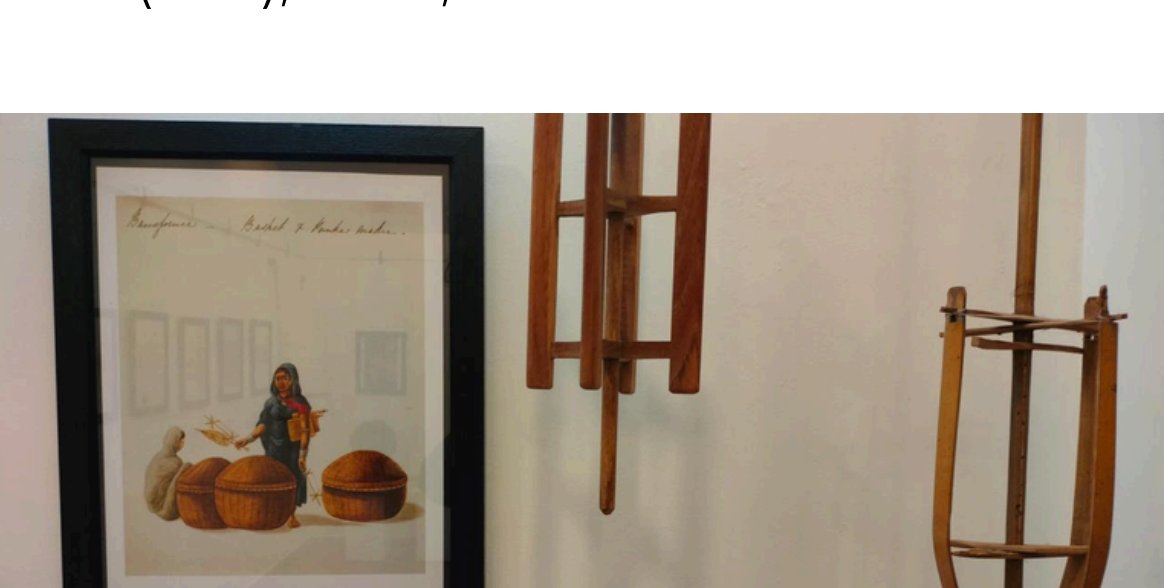
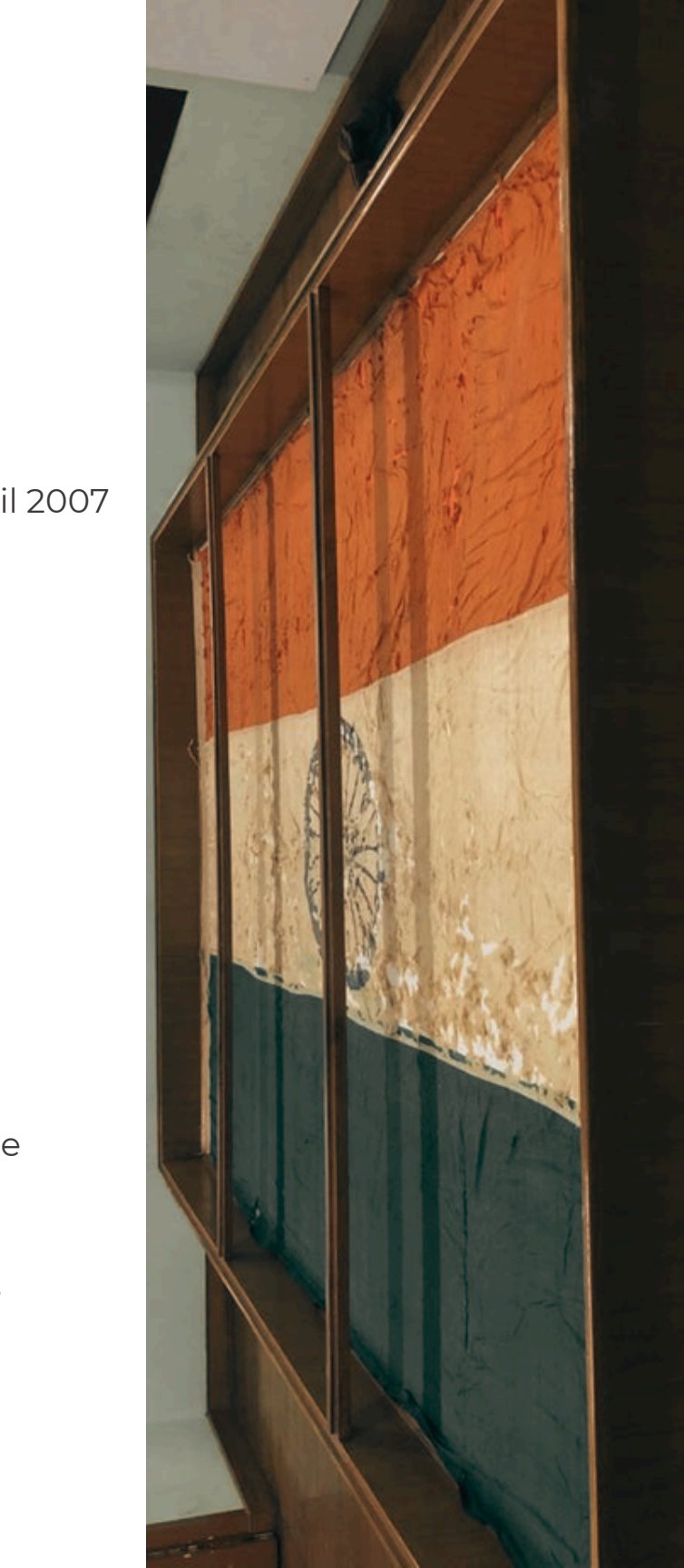
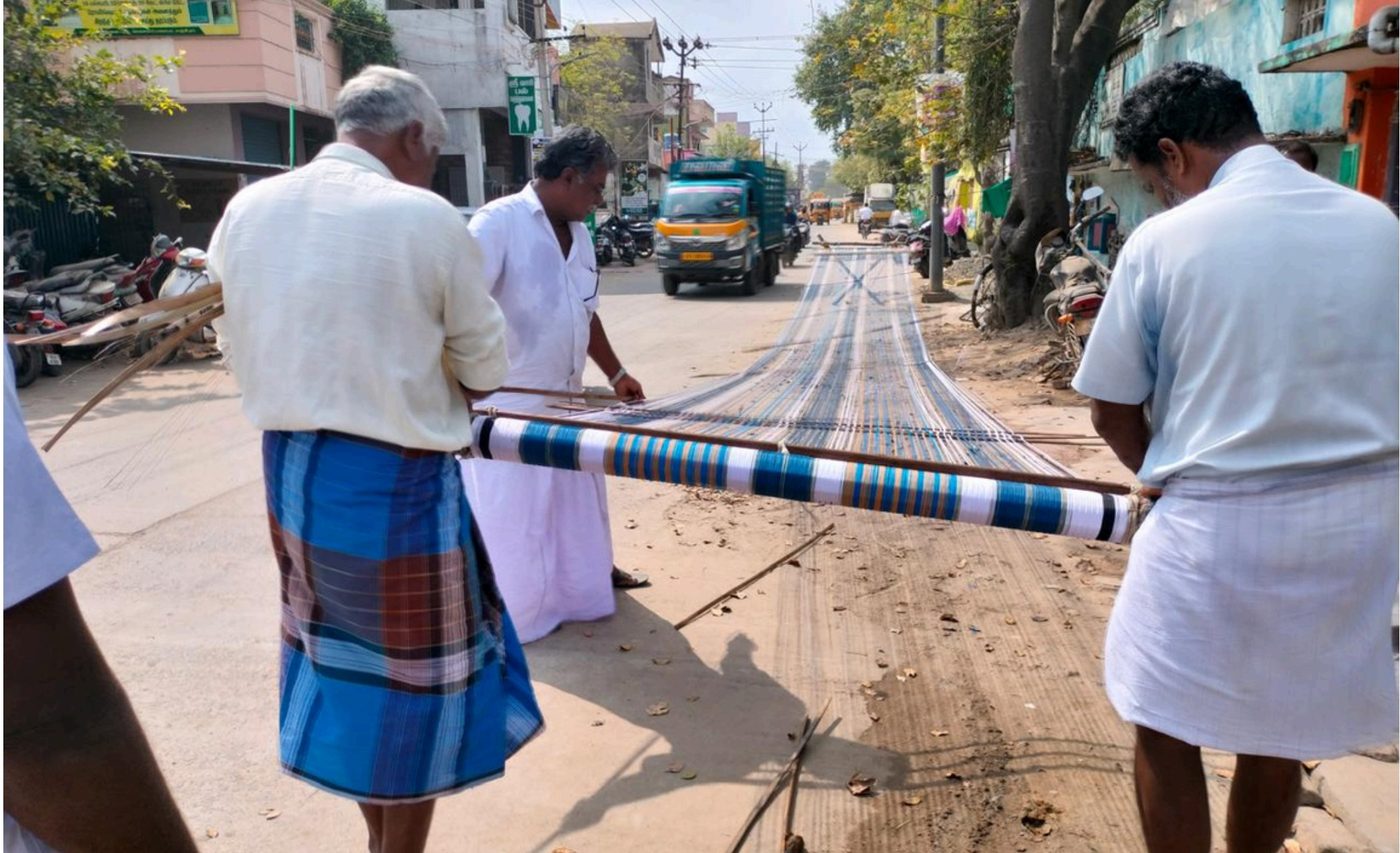
A material and social study of the lungi in South India — tracing how an everyday garment carries identity, labour, and memory.
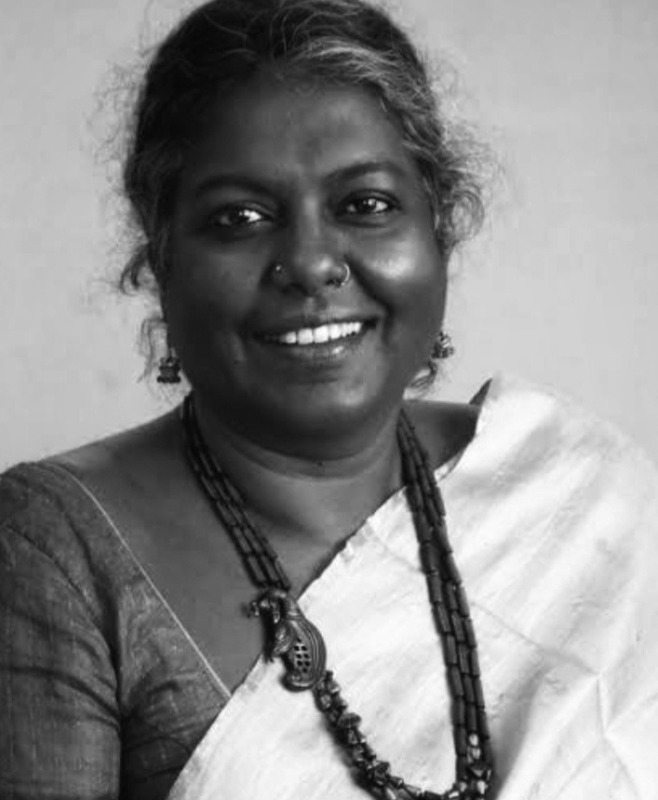
Dr. Bessie Cecil — textile researcher, educator, designer & curator tracing India's woven, dyed and printed traditions across two decades.
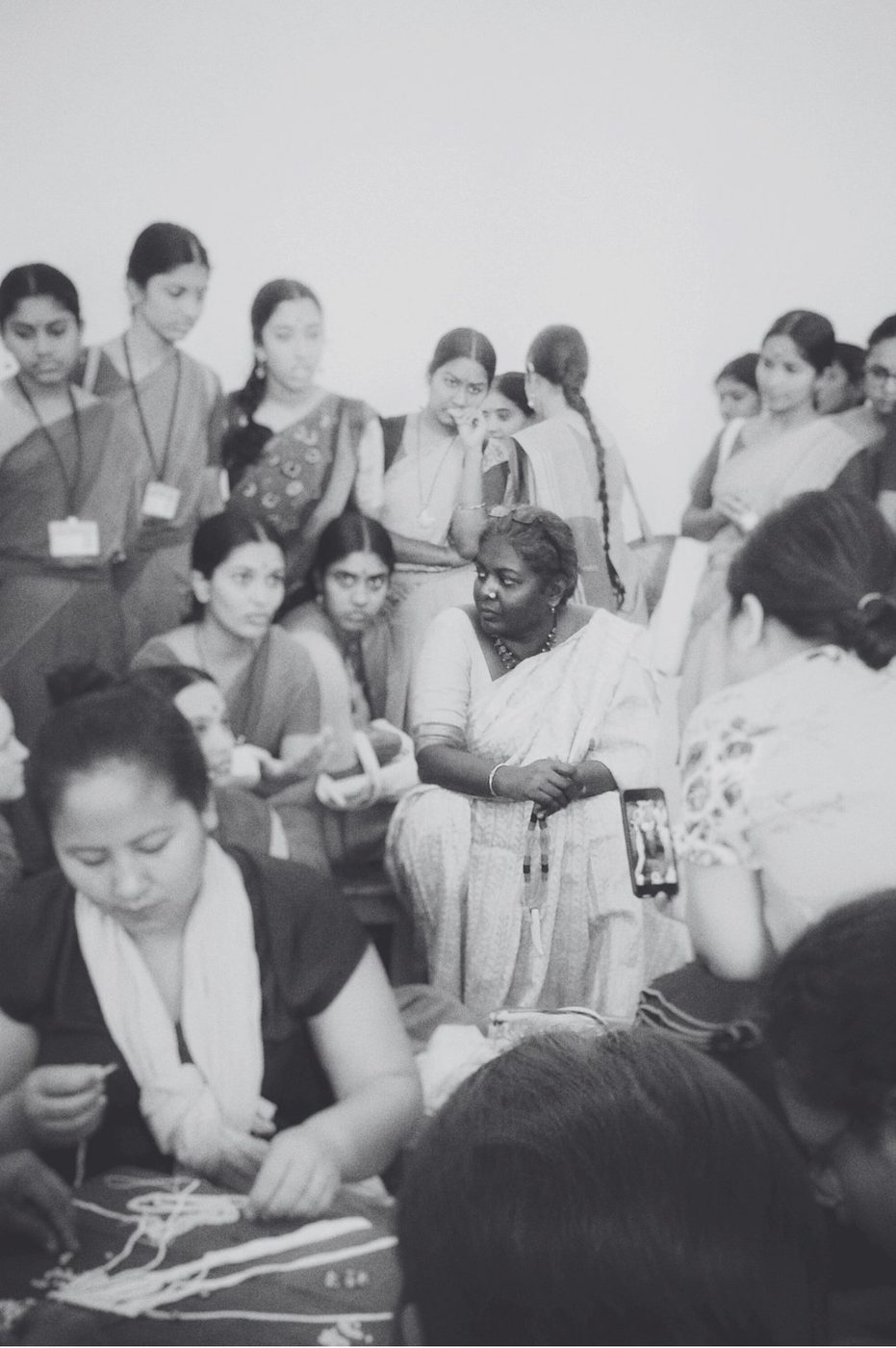
I treat textile traditions as living knowledge systems — continuing cultural practices that evolve with the hands and lives that carry them forward.
My work integrates fieldwork, technical analysis, oral histories, and visual documentation — feeding back into teaching, exhibitions, and publications. Each study grows from relationships built with artisans over time.
From handloom villages in Tamil Nadu to block-printing workshops in Rajasthan, from narrative embroideries of the Himalayas to museum archives abroad — I document what is made, by whom, and why it matters now.
An ongoing body of research documenting textile traditions as evolving cultural practices — from plant to pigment, loom to language, and the hands between.
A material and social study of the lungi in South India — tracing how an everyday garment carries identity, labour, and memory.
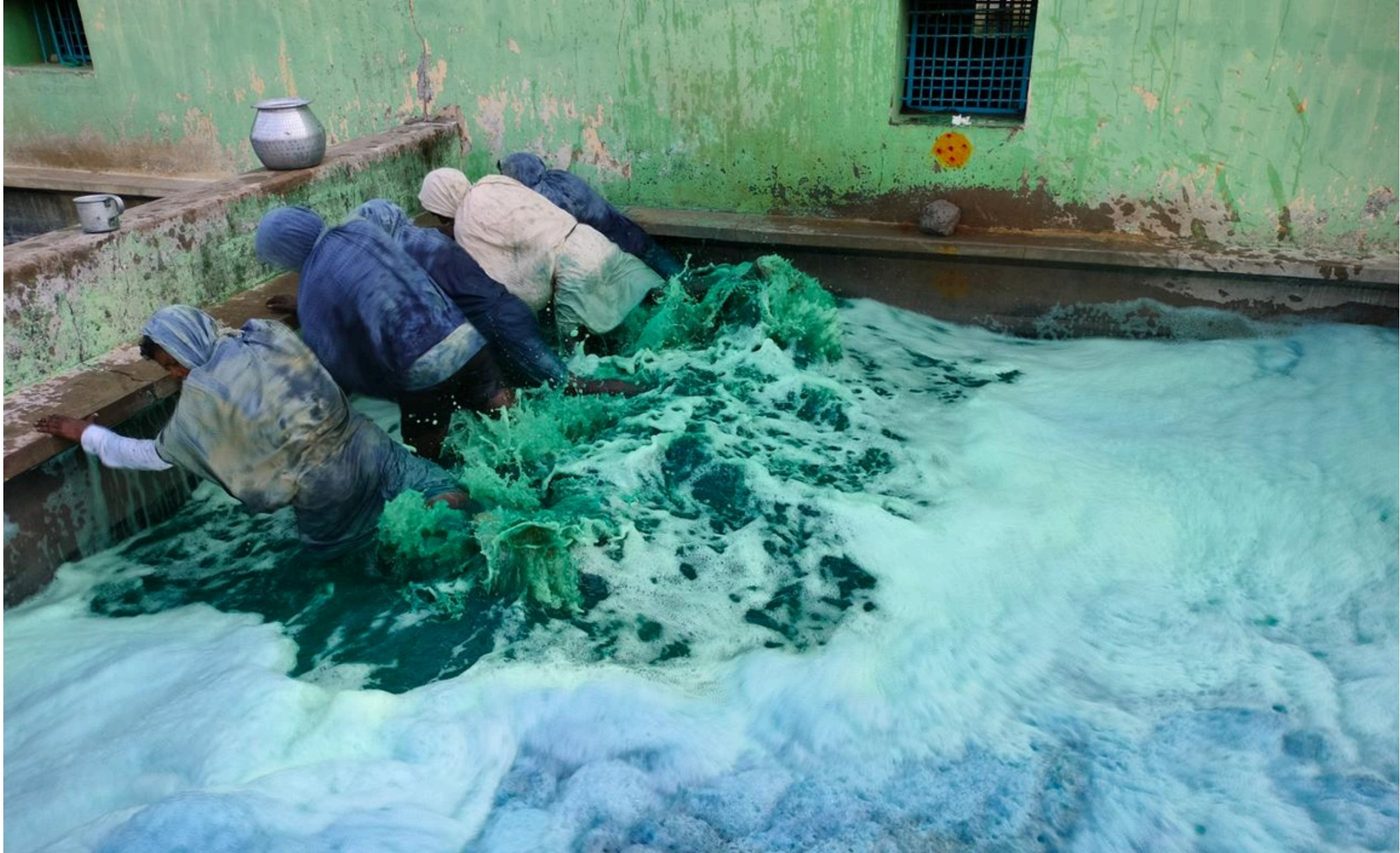
Indigenous indigo cultivation and extraction, traced from plant to pigment.
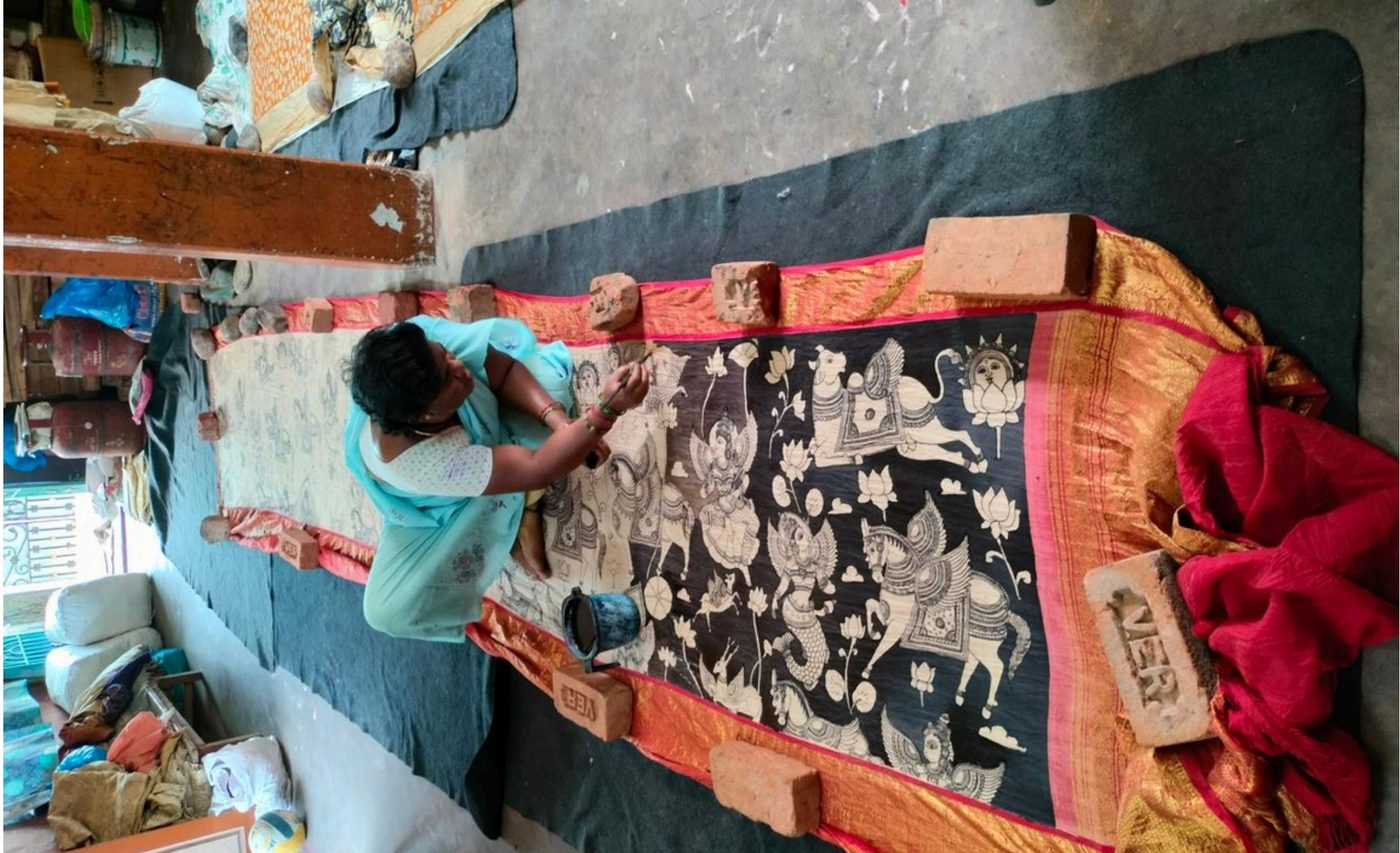
Narrative painted textiles — the kalamkari tradition of Srikalahasti, where myth becomes cloth.
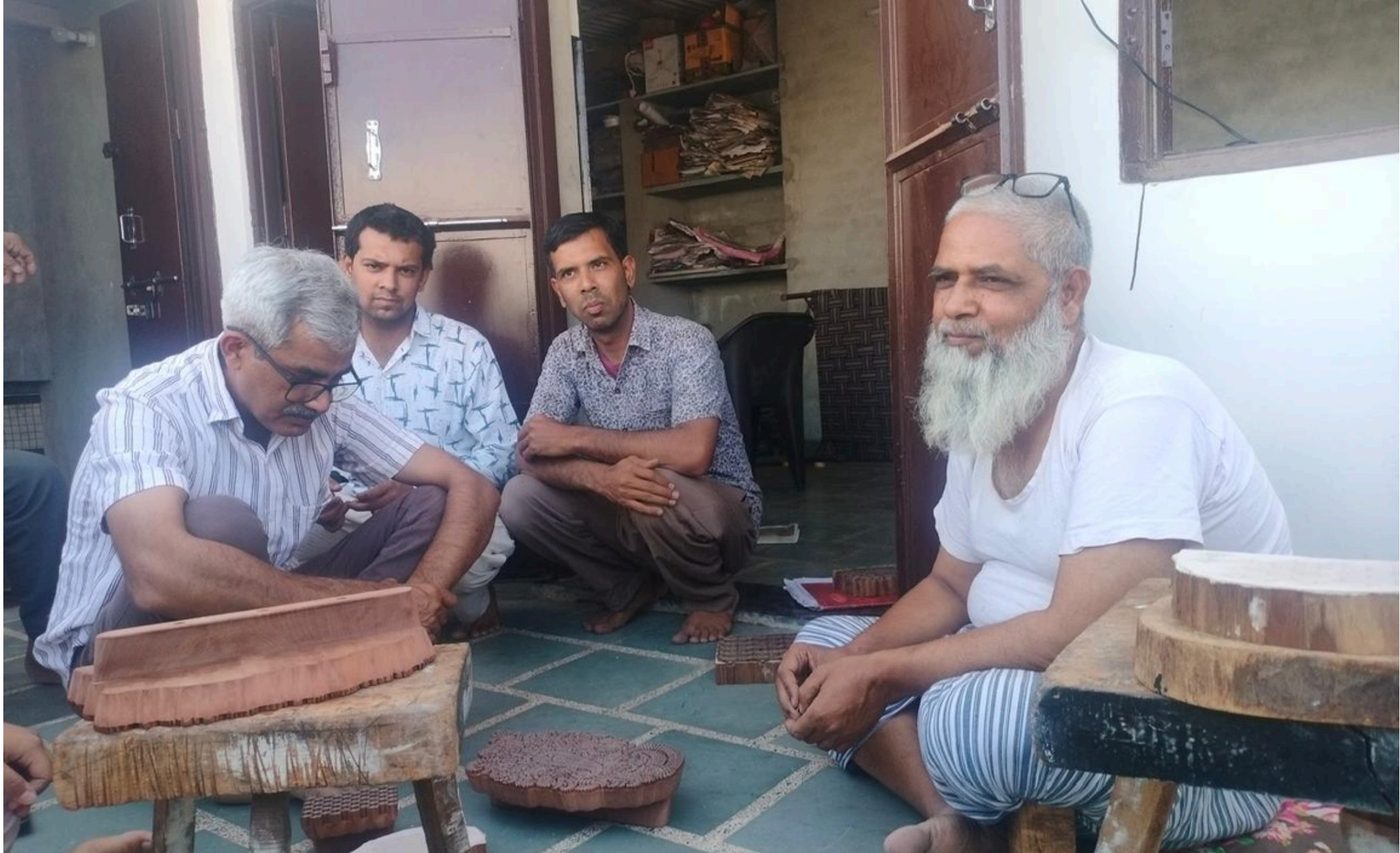
Block printing, natural dyes & pattern vocabularies — with FADAT.
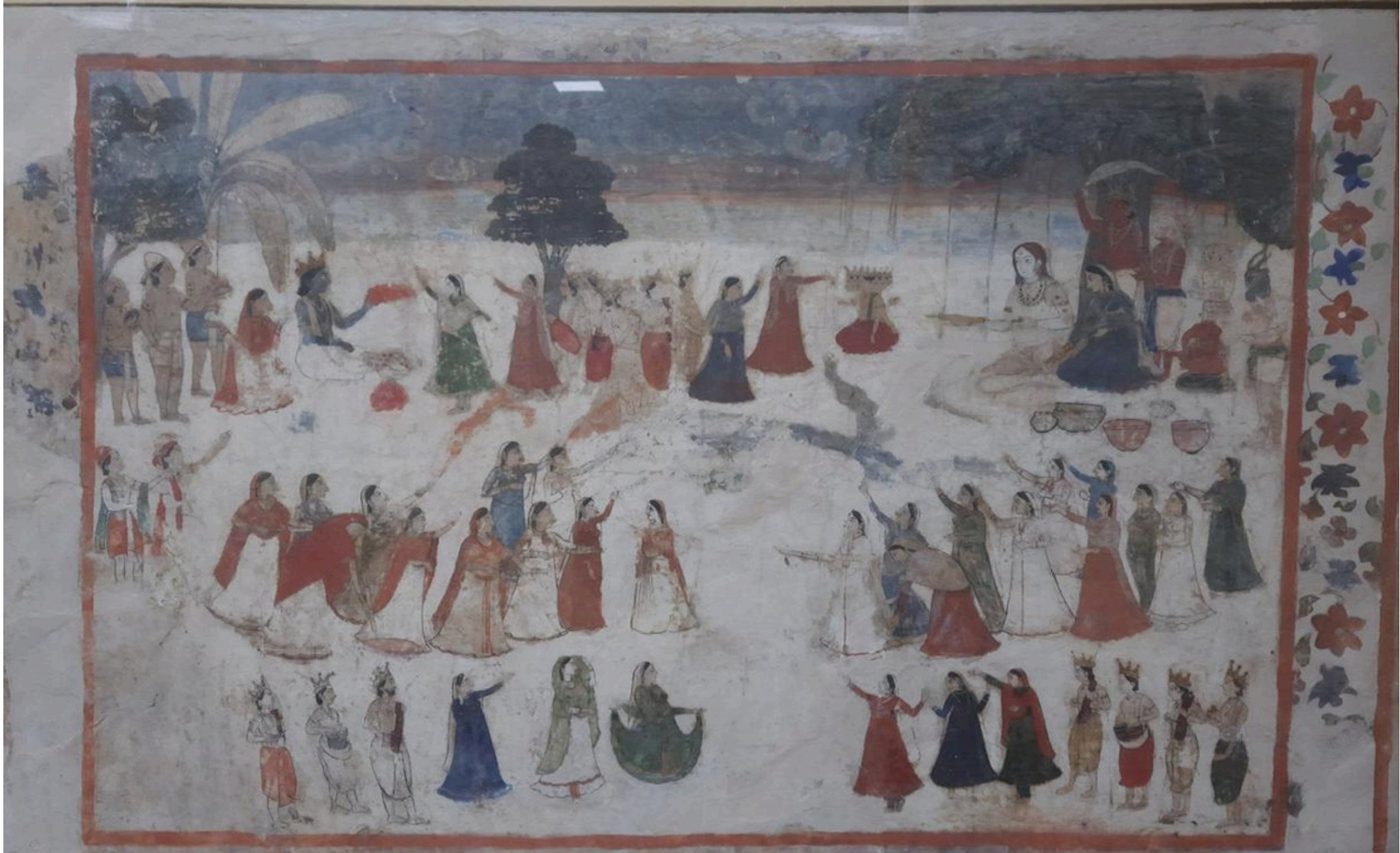
A research-led book project, MAPIN-approved. Tracing Himalayan double-sided silk embroidery as courtly art and domestic devotion.
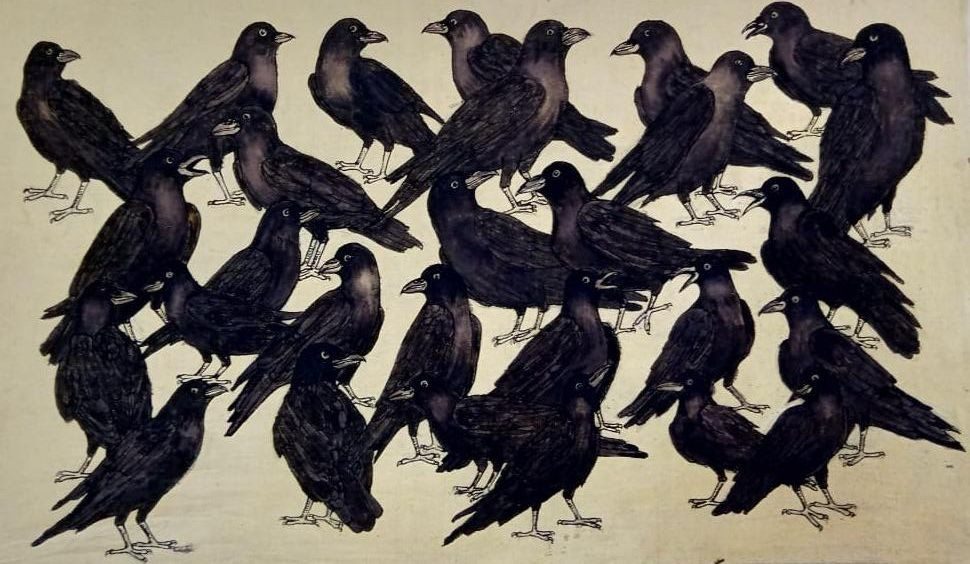
A monochrome painting in natural colour.
Developed at the Craft Education and Research Centre, Kalakshetra Foundation, Murder of Crows is a monochrome work prepared entirely from natural colours.
The conceptual framework and direction were developed by me, with execution carried out by the artist Venketesh. The collaboration brings together material exploration and painterly interpretation, grounded in traditional processes.
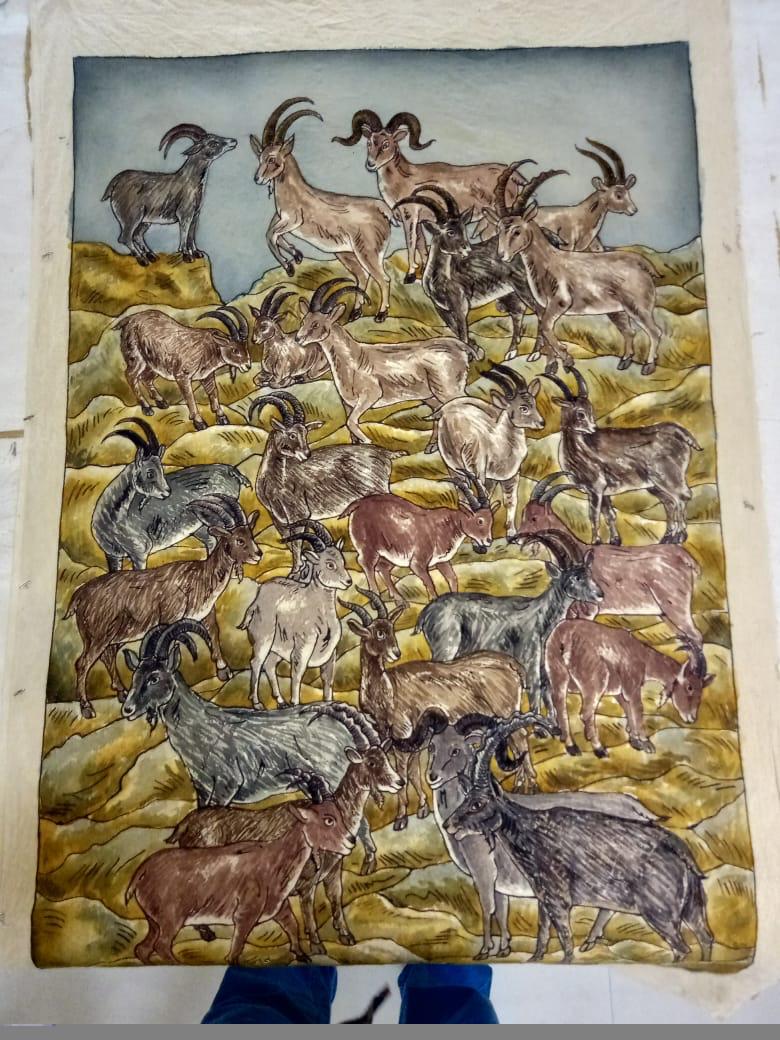
A multicoloured work rendered using natural dyes.
Herd of Goats is a multicoloured work rendered using natural dyes, where the final chromatic outcome emerges only through processing. Unlike conventional painting, the colours are not fully visible at the stage of application; they develop gradually through stages of treatment, requiring a precise understanding of material behaviour and sequence.
The conceptual framework and approach to the use of natural dyes were developed by me, while the subject and execution of the artwork were carried out by the artist Venketesh. The work reflects a collaborative engagement between process knowledge and artistic interpretation.
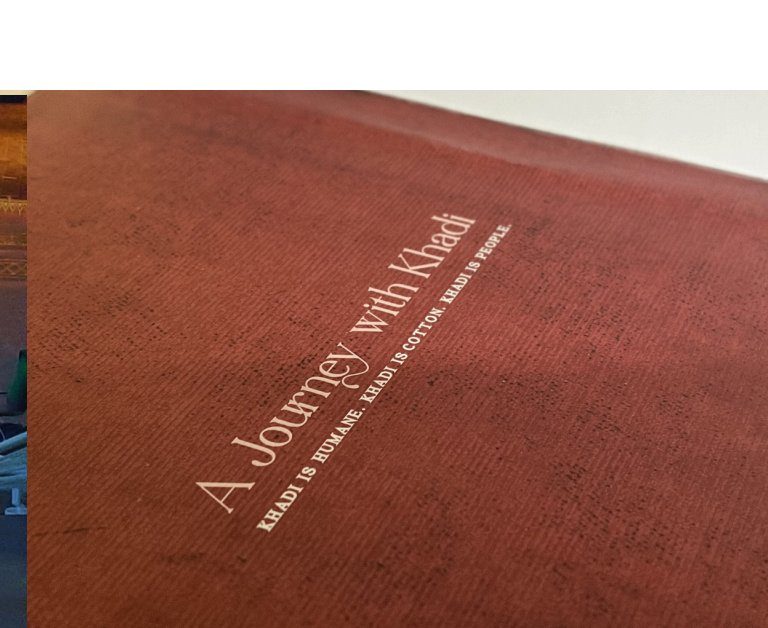
Khadi is humane. Khadi is cotton. Khadi is people.
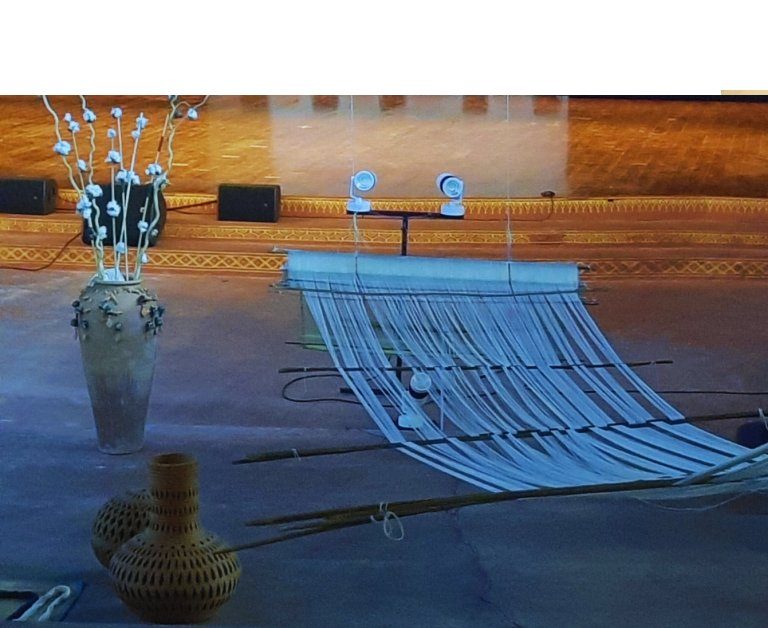
Handwoven textiles of India.
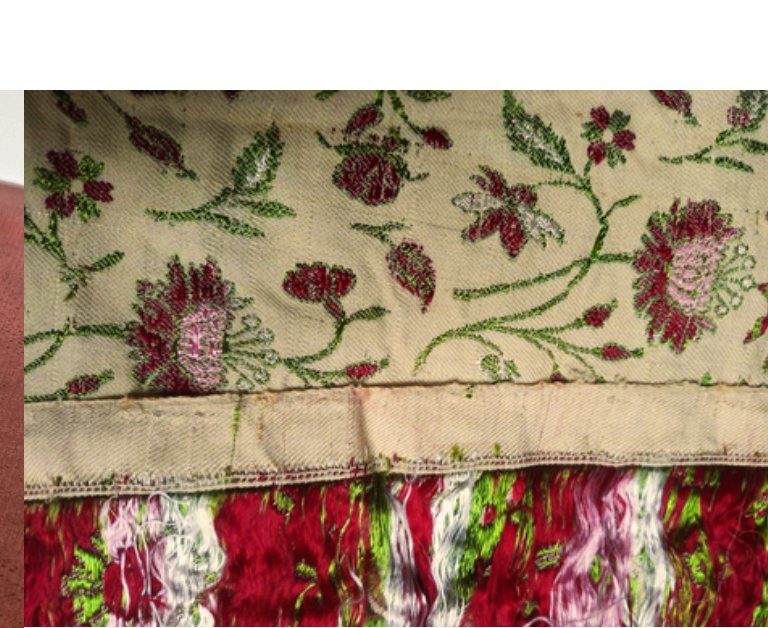
A book exploring woven traditions, with swatches.